Took a left turn at loss...

photo circa 2008 when I wrote Teetering on Disaster
I had every intention of showing up here with the reflection on the book tour...
But as life so often reminds us, our plans rarely hold a candle to where our hearts actually need to go. If you ready my last post, you know that we lost our Stilly - who stole our hearts for 15 years, a once in a lifetime type furball (I'll share more on that here soon).
... but the past few weeks my journey has meant stepping into remembrance, discomfort and the quiet, sacred territory of writing a parable on grief and loss.
That creative shift didn't happen in a vacuum. It started with a vulnerable, middle-of-the-afternoon text to a newfound soul sister, KerrieAnn: “Um, I’m writing for my healing, and now it’s becoming a parable of universal truths… can you give it a look?”
Her brilliant eye and magic touch are the very reason 7 Primal Wounds evolved from a messy doctoral project into the bestseller it is today. Having a friend who can hold space for your rawest grief while helping you polish it into art is a rare and precious gift.
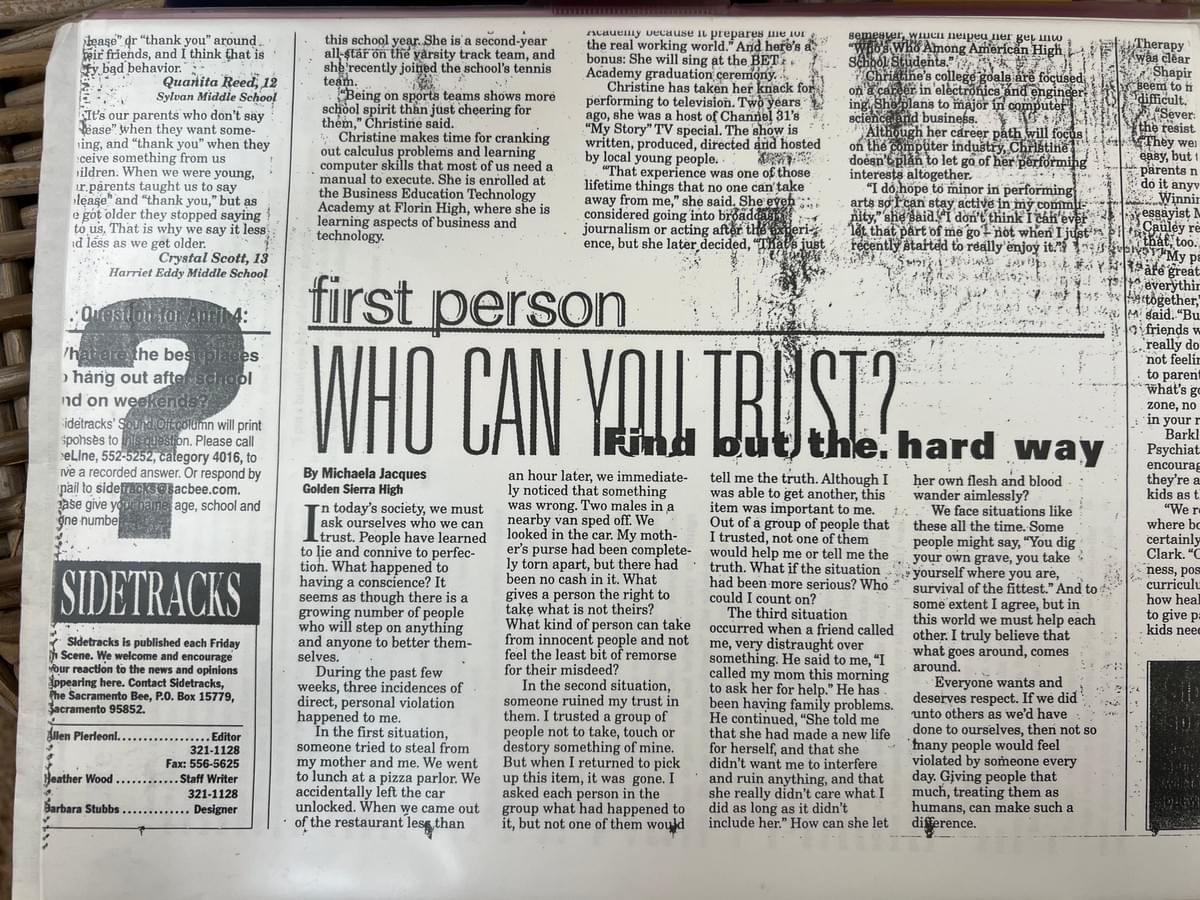
Writing, after all, has been the baseline of my entire life. My first piece was published in the Sacramento Bee when I was fourteen; by high school, I was reporting for the Georgetown Gazette, and years later, with my young son in tow, I came full circle as that paper’s editor. When 7 Primal Wounds launched into the world, I promised myself I wouldn’t dive into another book—at least not for a hot minute. I told my socials I needed a reprieve from the manicured photo-and-caption grind to come back to the place where my heart still finds beauty: the blog.
Ironically, my corner of the internet began back in 1999, before “blog” was even a household word and every post had to be coded line-by-line in raw HTML. Those early essays eventually became my memoir - Teetering on Disaster. Over the decades, people have found genuine kinship and deep intimacy in these words—and naturally, others have taken offense.
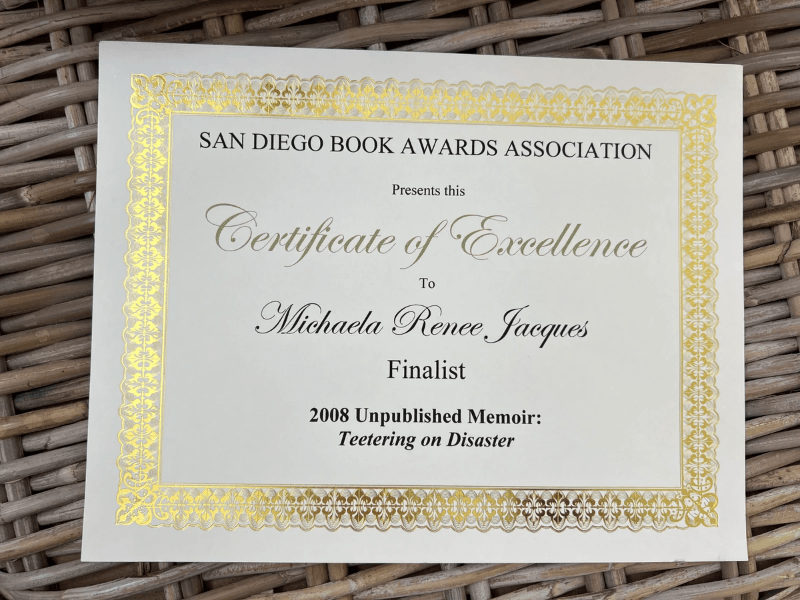
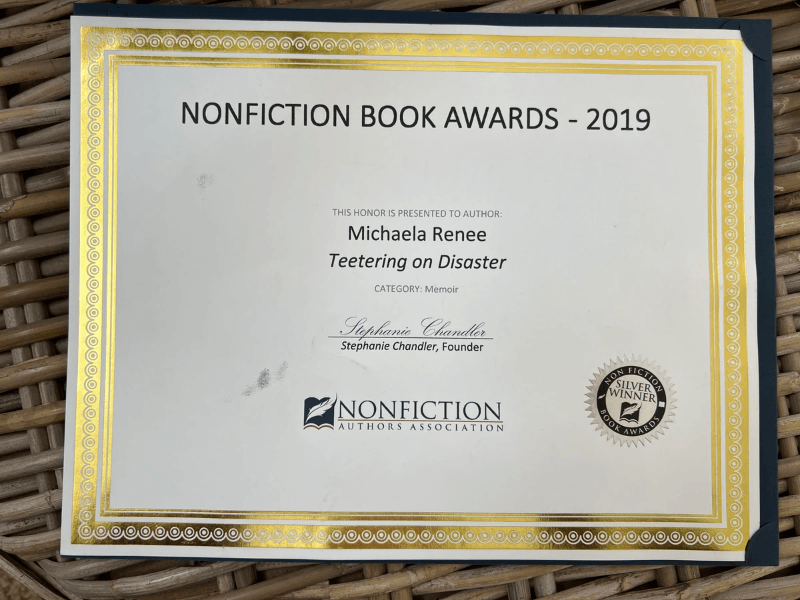
At its core, writing has always been a personal sanctuary for me—written for me to process, but shared for connection. My only hope in putting words into the world is to shine a gentle light on the places we often keep quiet, offering a mirror where someone else might see their own reflection and exhale.
I write first and foremost for myself—to process, to heal, and to make sense of the world—and I share it for true human connection, shining a light for anyone navigating their own dark corners.
No amount of posturing, intimidation, or projection has scared me into silence, nor has it changed the fact that this platform belongs to my voice, my craft, and those who meet it with open hearts. As a psychotherapist I've learned time and again trying to appease discomfort is not how growth occurs, growth comes from seeing the discomfort and desiring (and then taking action towards) something more comfortable.
That brings me to the piece below. I wrote it over a month ago and hesitated to hit publish, but it speaks right to the heart of what matters: the quiet grace of weathering life’s storms.
Without further ado, here is the post I never shared…
PRETTY IN PATINA
We live in a culture obsessed with pristine, out-of-the-box perfection. We buy things factory-sealed, spotless, and unblemished, treating any scratch or dent as a flaw to be corrected or replaced. In our personal lives, we often chase a similar illusion—believing that the goal of healing, growing, and loving is to emerge completely smooth, untouched by hardship, and free of emotional residue.
If we want something to look distressed, we buy it new, and then work hard to quickly destruct it (like a pair of ragged jeans).
As a therapist and relationship coach, I see this desire for sterile perfection all the time. People come into my office wanting to wipe the slate clean, erase their past mistakes, and bypass the messy, unglamorous work of healing. Or they want to dictate how the messy is going to look - at least to everyone around them- be in control of the messy everyone else sees.
A Badge of History
Unlike manufactured perfection, a patina can't be bought off a shelf. You cannot fake it, rush it, or order it with two-day shipping. It has to be earned through time and living.
Every scratch, scuff, and weathered spot tells the story of an object’s life, handling, and journey. It answers the question: Has this thing actually been used? Has it weathered the elements?
The same goes for us. The emotional equivalent of a patina is our history—the hard lessons, the broken engagements, the divorces, the grief, and the mistakes we've survived. When we try to hide our past or pretend we arrived at adulthood fully formed, we rob ourselves of our story. Your past isn't something to sweep under the rug. It is a badge of history. It proves that you stepped into the arena, took some hits, and kept going.
In my book, 7 Primal Wounds, I talk extensively about how our earliest attachment injuries shape the way we navigate the world. But those wounds, when brought into the light and tended to, transform. They stop being open bleeding sores and turn into a rich, protective patina. They tell the world: I have lived, I have struggled, and I am still standing.
Protection and Softening
In metallurgy, a patina serves a fascinating dual purpose. While it looks like mere surface decoration to the untrained eye, it actually acts as a protective layer that prevents further corrosion. It is a shield formed by the very elements that tried to destroy it.
Metaphorically, emotional patina does the exact same thing for our hearts.
When we are young, we are often sharp-edged. We have rigid defenses, black-and-white thinking, and fragile egos that shatter at the slightest criticism. We react out of survival, clawing back when we feel threatened. But as we experience the weathering of life—as we weather our own storms and navigate the complex, beautiful dark of long-term partnerships—something incredible happens.
The sharp corners are worn smooth. The blinding, unyielding glare of ego mellows into something warmer, deeper, and far more grounding.
That weathering doesn't make us cold or cynical; it makes us resilient. It builds a healthy protective layer that lets us say, "I know how to get through a storm, and I don't need to panic." It allows us to drop our armor not because we are naive, but because our patina has made us strong enough to handle whatever comes next.
The Human Equivalent: Richness in Relationships
If individual patina is about personal maturity, relational patina is where the real magic happens.
Just like a well-loved leather armchair, human relationships develop their own kind of patina. A brand-new relationship is exciting, shiny, and pristine—much like a brand-new car fresh off the lot. But it also lacks depth. It hasn't been tested.
Real, enduring love looks different. It is forged in the trenches of daily life: the arguments resolved with grace, the midnight tears wiped away, the quiet triumphs, and the messy business of bearing witness to each other's flaws.
As I’ve noted elsewhere, a true relationship isn't about finding someone who matches your fantasy of perfection. It’s a recipe of daring, challenge, adventure, laughter, tears, salt, and sugar. It’s about bringing your wounded self to someone else's wounded self.
When you spend years weathering life side-by-side, your partnership develops a hard-earned depth and beauty that only time can create. You stop keeping score of every little misstep because you recognize that the "battle scars" you both carry are pieces of the creation you are now. You wouldn't trade the history for a blank slate, because that history is what makes the bond uniquely yours.
Embracing Your Own Patina
So often, we waste precious energy trying to buff out our flaws. We wish we didn't have those triggers, we wish our past was cleaner, or we wish our relationships looked effortless like the ones we scroll past on a screen.
What if, instead, we started treating our history like a patina?
What if we looked at our scars, our emotional maturity, and the complex, beautiful patchwork of our lives not as damage, but as proof of character? What if we allowed the weathering of life to soften our sharp edges rather than harden our hearts?
Because at the end of the day, a life untouched by time and trial isn't a masterpiece—it’s just unfinished. And the best things in this life always come with a little history.
How are you learning to embrace the weathered, beautiful parts of your own story and relationships today?